 English
 Deutsch
If you’ve ever worried about doing something “wrong” on holiday, you’re not alone. Egypt is friendly, but it can feel different from home, especially at first. This guide is here to take the pressure off. You’ll know what to wear, how to greet people, and how to handle personal space without feeling tense.
Here’s the big idea: you don’t need to change who you are. You just need a few small habits that show respect.
Rule 1: Match the place you’re in
Egypt isn’t one single mood everywhere. A beach hotel in Hurghada feels different from a street market in Luxor. A boat trip feels different from a temple visit. If you match your clothes and behaviour to the place you’re in right now, you’ll avoid most awkward moments without overthinking it.
A simple way to think about it:
-
Resort areas: relaxed
-
Town streets and markets: a bit more covered, a bit more reserved
-
Temples and religious areas: more covered and calm
Rule 2: Calm and friendly beats “perfect”
You don’t need flawless manners. You need a calm, friendly tone. A simple hello, a small smile, and not rushing people makes a big difference. Most people mirror the energy you bring. If you stay relaxed, it stays relaxed.
Rule 3: Ask before you take
This one rule does loads of work. It covers:
-
photos of people
-
stepping into someone’s doorway for a better picture
-
touching items on a stall
-
walking into a private-looking space
Asking first saves you from those sudden “Oh no, was that rude?” moments.
Rule 4: Use soft “no” and keep moving
You can say no without a fight. You don’t need a long explanation. A polite “no, thank you” and moving on is normal. If you stop and debate, it can turn into a longer chat than you wanted.
Rule 5: Give yourself buffer time
Rushing makes everything harder. Heat, queues, and finding toilets can slow a day down. If you plan with a little extra time, you’ll feel more in control. And when you feel in control, you make better choices.
Quick confidence check (what matters most)
If you do these, you’ll be fine:
-
be polite
-
be patient
-
dress a bit more covered in older areas and religious places
-
don’t take close-up photos of people without asking
-
keep couples’ affection low-key in public
Dress without stress (what to wear where in Egypt)
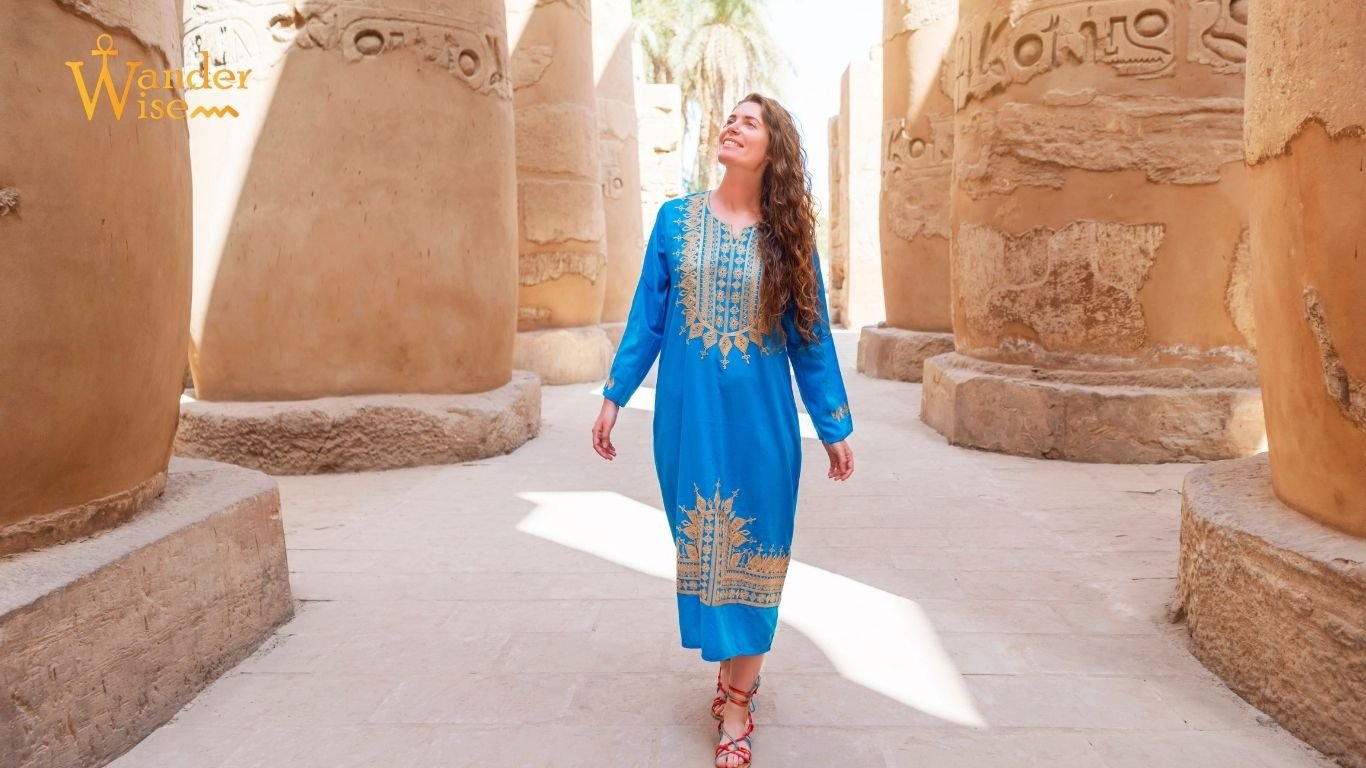
The easiest way to avoid awkward moments in Egypt is to dress for the place you’re in, not for the whole country. You don’t need to dress “like a local”. You just need to look tidy and respectful in public places, and you’ll feel more comfortable too.
Here’s a simple, no-drama guide you can actually use while packing.
1) Beach resorts in Hurghada (hotel, pool, beach)
This is the most relaxed setting.
What’s fine:
-
Swimwear at the pool and beach
-
Shorts, vests, summer dresses around the resort
-
Light cover-up for walking to breakfast or the bar
What’s smart:
-
Bring a cover-up you can throw on quickly (it saves you thinking)
What to avoid:
-
Walking around the whole hotel in only swimwear away from pool/beach areas. It’s not “bad”, it just looks out of place.
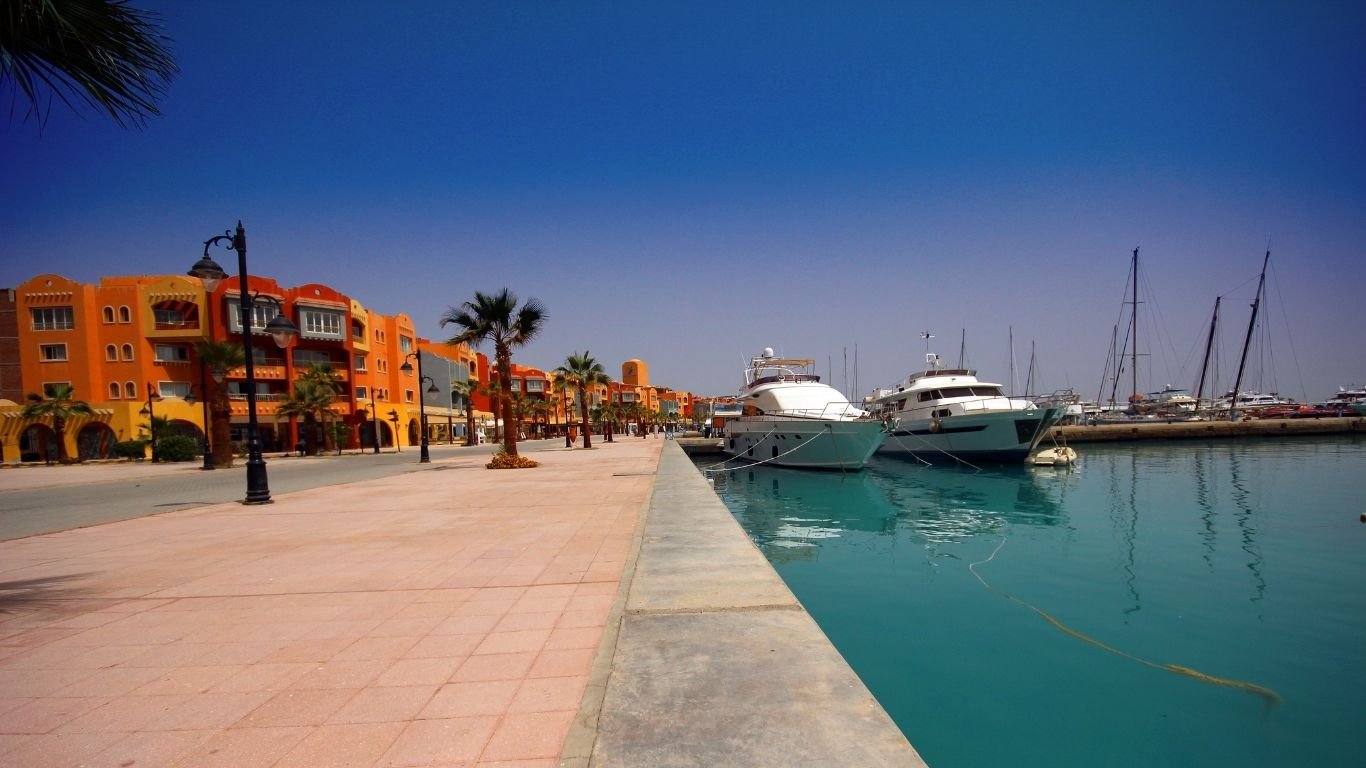
2) Hurghada town, marinas, and normal streets
This is where visitors sometimes feel unsure. The fix is simple: cover a bit more than you would at the pool.
A safe, easy outfit:
-
T-shirt or loose top
-
Knee-length shorts, long shorts, or a skirt/dress that’s not super short
-
Comfortable shoes or sandals
If you’re worried about attention:
-
Choose looser clothes
-
Avoid super tight outfits in busy street areas
-
Keep it simple and practical
You’re not hiding. You’re just blending in a little more.
3) Luxor, Aswan, and historic sightseeing days
On culture and history days, it’s smart to dress for:
-
heat
-
walking
-
being in mixed public spaces
Best choices:
-
Light, breathable clothing
-
Shoulders covered (easy win)
-
Shorts that reach nearer the knee, or a skirt/dress that’s not too short
-
Closed-toe comfy shoes for temples and uneven ground
This is especially helpful on a Hurghada to Luxor day trip, because you’ll feel more comfortable moving between busy sites. If you’re planning that day, this page helps:
https://wanderwisetours.com/hurghada-to-luxor-day-trip-2025/
4) Temples, museums, and religious-feeling places
Even if a site isn’t “religious” today, it still matters how you show up. These places are important and often crowded, so dressing a bit more covered is a good respect signal.
A safe, respectful baseline:
-
Covered shoulders
-
Avoid very short shorts/skirts
-
Avoid see-through tops
-
Bring a light scarf or shirt layer just in case
This doesn’t have to be heavy or hot. A thin layer is enough.
5) Desert safaris and long outdoor trips
These are practical days. Wear what makes you comfortable and protected.
What works:
-
Loose trousers or longer shorts (sand + sun protection)
-
Trainers or closed shoes
-
Sunglasses and a hat
-
A light layer for evening (it can feel cooler later)
6) What about couples and affection?
This is not about being strict. It’s about avoiding awkward looks in public places.
In resorts, couples are relaxed. In towns and older areas, keep it low-key:
-
Holding hands is fine
-
Big cuddles and heavy kissing in public can feel out of place
Quick packing cheat sheet (easy wins)
If you pack these, you’re covered for almost everything:
-
One light scarf or thin overshirt
-
Two tops that cover shoulders
-
One pair of longer shorts or light trousers
-
Comfy walking shoes
Greetings and small talk (what to say, how to respond, when to keep it short)
Egypt is big on greetings. You don’t have to be chatty, but a quick hello and a friendly tone makes everything smoother. It’s the easiest way to avoid awkward moments with hotel staff, drivers, shop owners, and guides.
The simplest greeting that always works
A smile and “hello” in English is fine. But if you want a tiny bit of local language that gets warm reactions, use:
-
Salam (hello/peace)
-
Shukran (thank you)
That’s enough to show respect without trying too hard.
What people might say to you (and how to reply)
You’ll hear a few repeated phrases. You don’t need perfect answers. Keep it simple.
“Hello my friend” / “Welcome”
A simple “hello” or “thank you” is fine.
“Where are you from?”
This is normal small talk. A short answer works:
-
“UK.” “Germany.” “Poland.”
Then you can smile and move on.
“How are you?”
A short “good, thanks” is plenty. You don’t need a full conversation.
When small talk is friendly (and when it’s leading to a sale)
In Egypt, people can be genuinely friendly and still be working. Both can be true at once.
A quick rule:
-
If you’re in a shop or near stalls, the chat may lead to “come look”.
-
If you’re with your guide/driver/hotel staff, the chat is often just polite.
Either way, you can stay friendly without getting pulled into something.
The polite way to end a conversation
This is where many tourists get stuck. They keep talking because they don’t want to be rude. But ending a chat politely is normal.
Use a “soft exit”:
-
“Thanks, have a nice day.”
-
“No, thank you.” (then keep walking)
-
“Maybe later.” (only if you mean it, otherwise it invites follow-up)
The key is movement. If you stop and explain, it becomes a longer moment.
Handshakes and personal boundaries (quick and easy)
People may offer a handshake. If they do, a normal handshake is fine.
If you’re unsure (especially with someone of the opposite sex), the safest approach is:
-
smile
-
greet
-
keep hands to yourself unless they offer first
You don’t need to overthink it. Follow the other person’s lead.
Guides, drivers, and hotel staff: what feels respectful
These roles involve service, so respectful doesn’t mean “formal”. It means:
-
say hello
-
confirm details calmly
-
say thank you
-
be clear about what you want
For tours, two questions save loads of stress:
-
“What time?”
-
“Where is the meeting point?”
You can also read more about 25 Useful Words You’ll Actually Use
Personal space and photos (queues, kids, couples, asking first)
This is the part that makes people nervous, so let’s keep it simple. In Egypt, you’ll be fine if you follow two ideas:
-
don’t crowd people
-
don’t take close-up photos of people without asking
Most awkward moments happen when someone feels rushed, pushed, or “used” as a photo background.
Personal space in busy places (markets, temples, hotel lobbies)
Egypt can feel busy, especially in tourist areas and markets. People may stand closer than you’re used to in the UK. It isn’t always rude; it’s often just how crowds work.
What helps:
-
Give people a little room when you can. If you’re looking at a stall, step slightly to the side instead of blocking the path.
-
Don’t push past. A calm “excuse me” and a small wait usually works better than forcing your way through.
-
In queues, keep it tidy. Stand behind the person in front, and avoid squeezing in from the side.
If someone gets too close, you can simply step back a half-step. No drama needed.
Couples and affection in public
In resort areas, couples are relaxed and no one cares. In towns and older areas, it’s better to keep it low-key. This is less about “rules” and more about not drawing attention.
Usually fine:
-
holding hands
-
walking close together
-
a quick peck
Better to avoid in public streets:
-
heavy kissing
-
long cuddling
-
anything that turns into a big scene
If you keep it subtle, you’ll feel more comfortable too.
Kids: the biggest “photo awkwardness” trigger
Lots of visitors love taking pictures of kids because they look cute or curious. But this is the one area where you should slow down the most.
A simple rule:
-
Don’t photograph kids close-up unless the parent (or adult with them) clearly agrees.
Even if a child smiles at you, it doesn’t mean their family wants their photo taken.
Photos in general: what’s ok, what needs a quick ask
Usually fine:
-
wide shots of streets and markets where people aren’t the main subject
-
landscapes, boats, beaches, and buildings
-
general temple photos
Ask first:
-
close-up photos of a person’s face
-
shop owners, workers, and anyone who is clearly “the subject”
-
photos inside private spaces or home entrances
-
close-up photos of kids (ask the adult)
If you’re unsure, ask. A quick ask prevents 99% of weird moments.
How to ask for a photo without making it a big deal
Keep it light:
-
smile
-
point to your camera
-
ask with a calm tone
If they say yes, great. If they say no, accept it fast.
How to handle “no”
A polite “no” is normal. People don’t owe anyone a photo.
Do this:
-
smile
-
say “ok, thanks”
-
move on
Don’t do this:
-
argue
-
bargain
-
sneak a photo anyway
A small tip for temples and sacred-feeling places
Even though temples aren’t active religious sites in the same way, they still feel important to many visitors. Loud jokes, climbing, or posing in a disrespectful way can annoy others.
Keep it simple:
-
speak a bit softer indoors
-
don’t block entrances for ages for photos
-
let others pass
Money moments (tipping, prices, bargaining, saying no politely)
Money is where most travel anxiety lives. Not because Egypt is “bad”, but because the rules can feel unclear when you’re new. This section keeps it simple so you don’t feel awkward.
Tipping in Egypt (what’s normal)
Tipping happens a lot in Egypt. Think of it as a small “thanks” for service, especially when someone is carrying bags, helping you quickly, or looking after you on a tour.
Where you might tip:
-
hotel staff who help with bags or room service
-
drivers and guides on tours
-
boat crew on snorkelling trips
-
toilets with an attendant
-
someone who gives you real help (not just sales talk)
The key: tip when you genuinely feel helped. You don’t need to tip every time someone speaks to you.
Cash basics (easy and stress-free)
-
Carry small notes so you can pay quickly without fuss.
-
Keep your main cash in one place and a small amount in an easy pocket.
-
Don’t flash a thick bundle of money in busy areas.
Even on a relaxed day, this just makes life smoother.
Prices and “tourist prices”
Some places have fixed prices. Some don’t. In markets and small souvenir shops, the first price can be high. That doesn’t mean you’re being attacked. It’s just how bargaining culture works.
A simple mindset:
-
You’re not trying to “win”.
-
You’re trying to pay a price that feels fair and leave with a good mood.
Bargaining without drama (the calm method)
You don’t need to become a pro negotiator. Use a simple routine:
-
Ask the price.
-
Smile.
-
If it’s too high, say “too expensive” and offer less.
-
If they say no, either raise slightly or walk away politely.
Most of the time, walking away is the only “power move” you need.
Saying no politely (without getting pulled into a long chat)
This is the biggest anti-awkward skill.
What works:
-
“No, thank you.”
-
Smile.
-
Keep walking.
What causes stress:
-
stopping
-
explaining why you’re not buying
-
debating the price when you don’t want the item
If you keep moving, the moment ends fast.
Free “gifts” and pressure tactics (how to handle them)
Sometimes someone may try:
-
handing you something “free”
-
starting a long story
-
putting an item in your hand
-
offering a “special deal” that feels urgent
You can stay polite and still protect your space:
-
don’t take items you didn’t ask for
-
hand it back calmly
-
say “no, thank you”
-
walk on
You don’t owe anyone your time just because they started talking.
Tours: the money questions that stop surprises
On tours, most stress comes from not knowing what’s included. Before you go, ask two basic questions:
-
“Is this included?” (tickets, lunch, transfers, snorkelling gear)
-
“What time and where is pickup?”
Here are the real-life moments where people freeze up and think, “What do I do now?” This section gives you simple scripts and choices, so you feel calm, not awkward.
Handy scenarios (quick “do this” guides)
Scenario 1: Someone is being friendly, but you’re not sure if it’s a sales chat
What to do:
-
Smile, say hello, keep moving.
-
If they invite you to a shop and you’re not interested:
“No, thank you.” (then walk on)
If you stop and debate, it turns into a longer chat. If you keep walking, it ends politely.
Scenario 2: A shop owner offers you tea
You have three easy options:
-
If you’re curious and have time: accept, take a sip, stay friendly.
-
If you’re tired or rushed: “No, thank you” and leave.
-
If you feel pressured: step back, give the tea back, and walk away calmly.
Accepting tea doesn’t mean you must buy anything. But if you accept and stay a long time, it’s polite to be kind and not waste their time.
Scenario 3: You want a photo of someone or their stall
Best approach:
-
Smile, point to your camera, ask first.
-
If they say yes: take one quick photo, then say thank you.
-
If they say no: smile, say thanks, and move on.
A fast, respectful ask usually gets a better reaction than a sneaky photo.
Scenario 4: You feel overwhelmed in a market or busy street
Do this:
-
Step to the side.
-
Take 30 seconds.
-
Drink water.
-
Decide your next move (taxi, café, hotel, or continue).
Rushing is what makes everything feel harder. A tiny pause resets your mood.
Scenario 5: Someone stands too close or keeps following you
You don’t need to argue.
-
Take a half-step back.
-
Keep walking.
-
If it continues: go towards a busier area or your hotel entrance.
Keeping calm helps. Big reactions can sometimes make it feel more intense than it needs to be.
Scenario 6: Temple visits and “respect”
The simplest respect rules at historic sites:
-
Don’t climb on things that look fragile.
-
Don’t block doorways for ages for photos.
-
Keep voices a bit lower indoors.
-
Let others pass.
You don’t need to be serious. Just don’t treat it like a playground.
FAQ: Egypt etiquette for tourists
Do I need to dress very conservatively everywhere?
No. Dress for the place you’re in. Resorts are relaxed. Towns and temples feel better with a bit more coverage.
Will I offend people if I don’t speak Arabic?
No. A friendly tone and patience matters more than language. A simple “hello” and “thank you” helps, but it’s not required.
Is it rude to say no to sellers?
Not at all. “No, thank you” is normal. The key is to say it and keep moving.
Can couples hold hands in public?
Yes. Resorts are relaxed. In towns and older areas, keep affection low-key to avoid awkward looks.
Are photos allowed everywhere?
Buildings and general scenes are usually fine. For close-up photos of people (especially kids), ask first.
Comment (0)