 English
 Deutsch
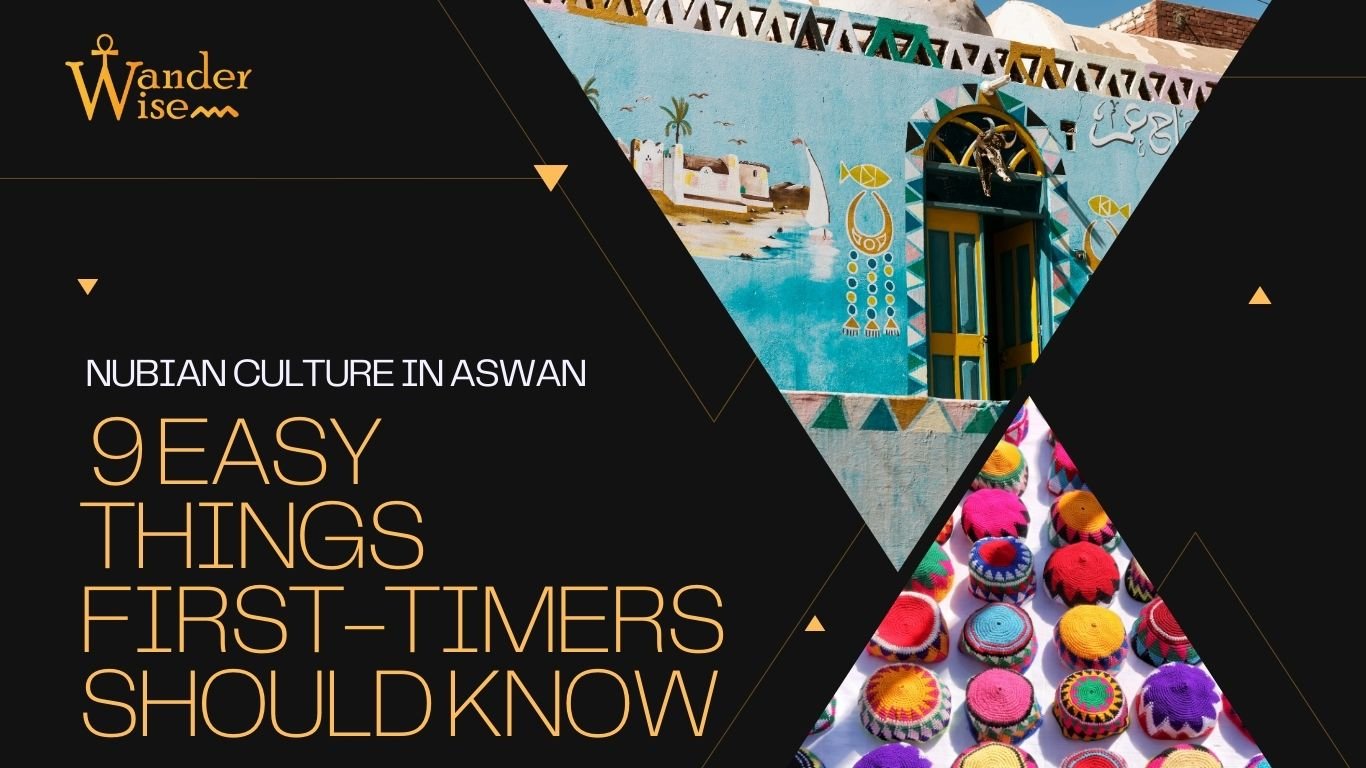
When people say “Nubian culture”, they’re talking about a community from the far south of Egypt and northern Sudan, shaped by the Nile for a very long time. In Aswan, Nubian culture isn’t something locked behind glass. It’s part of day-to-day life. You’ll notice it in the look of some homes, the colours, the music you hear, and the way many people welcome visitors.
Aswan is a brilliant place to start because it sits close to Nubian villages and islands. That means you can get a feel for Nubian style without needing to do a long trip. Sometimes you’ll spot it just by walking near the river, seeing painted walls, or browsing small shops.
This guide is for travellers who want to enjoy that side of Aswan without feeling awkward or worried about doing the wrong thing. It’s practical, not preachy. You’ll learn:
-
what the bright house colours are about (and why you see them a lot)
-
how music and celebrations show up in everyday life
-
easy greetings that feel polite
-
how to take photos in a way that feels respectful
-
what to buy if you want a souvenir linked to local craft, not cheap rubbish
One simple idea helps a lot: Nubian culture is not a show put on for tourists. It’s people’s real life. So the aim is to be curious and kind, and to ask before you do things like taking close-up photos. If you keep your approach friendly and calm, you’ll usually get a much warmer experience back.
As you read, keep these planning pages open so this culture guide connects to your real trip plan:
-
-
Aswan tours and guide hub: https://wanderwisetours.com/aswan-tours-guide-1-3-days/
-
Abu Simbel private tour: https://wanderwisetours.com/abu-simbel-private-tour/
-
Private day tour to Abu Simbel from Aswan by car: https://wanderwisetours.com/st_tour/private-customizable-day-tour-to-abu-simbel-from-aswan-by-private-car/
-
Nubian homes and colours (what you’re seeing, and why it looks so bright)
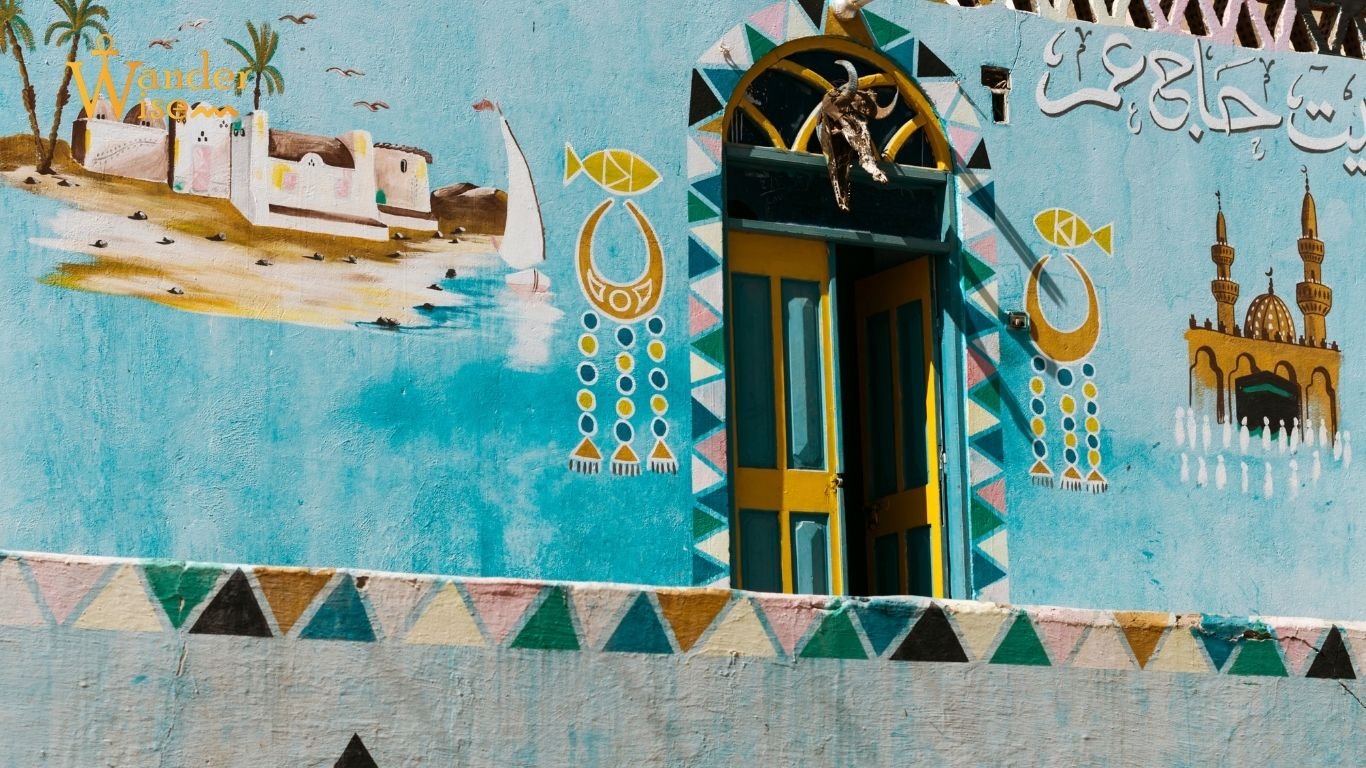
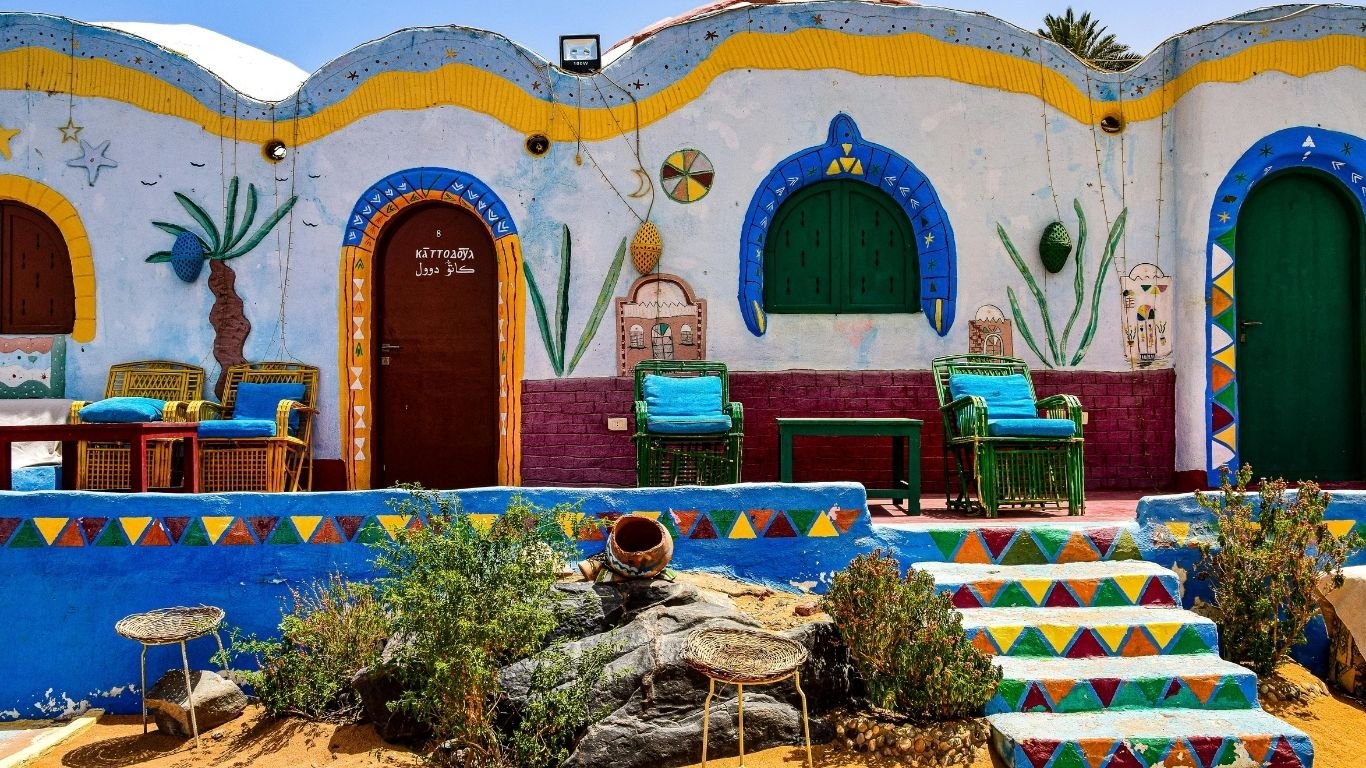
One of the first things many people notice around Aswan is how colourful some Nubian areas look. You might see houses painted in strong blues, yellows, oranges, and greens. You’ll also spot patterns on walls, painted door frames, and little details that feel cheerful and personal.
It’s easy to think, “This must be just for tourists.” But a lot of the colour is simply a local style. Homes are lived-in spaces, and people put care into how they look. In hot places, colour can also make streets feel less harsh and more welcoming. It’s not a museum look. It’s everyday life with personality.
What you might notice on walls and doorways
Depending on where you are, you may see:
-
-
-
Painted patterns: simple shapes, lines, dots, and repeating designs
-
Decor around the entrance: doors and frames get attention because that’s what guests see first
-
Courtyards: many homes are built around a private open space, so families can sit outside without being on the street
-
Handmade touches: little bits of craft that make a place feel like a home, not a rental
-
-
If you’re walking past and you’re curious, it’s fine to look. Just don’t step into someone’s doorway or courtyard without being invited. It sounds obvious, but people sometimes do it for photos.
If you’re invited into a home or a local place
Sometimes you might get invited in, especially if you’re on a Nile boat trip or visiting a Nubian-style area with a guide. If that happens, keep it simple and friendly:
-
-
-
Take your shoes off if you see others doing it, or if the host suggests it
-
Accept tea or a soft drink if offered (you can take a small sip if you’re not thirsty)
-
Don’t wander around the home like it’s a public site—wait to be shown
-
Ask before you take photos inside, even if the place looks “set up”
-
-
A polite vibe matters more than perfect manners. If you’re calm and respectful, you’ll usually be treated warmly.
A quick “photo” reminder for colourful houses
Colourful walls are very tempting for pictures. The safest rule is:
-
-
-
If it’s clearly a public street wall, you’re fine to take a general photo.
-
If it’s clearly part of someone’s home entrance, ask first before taking a close-up that includes the doorway or inside space.
-
-
You’ll avoid awkward moments, and you’ll often get a nicer interaction too.
What this means for your Aswan plan
If you want to see this side of Aswan, don’t overthink it. You don’t need a packed schedule. A simple mix works best:
-
-
one main historic stop (like a temple visit)
-
plus a calmer river moment where you can see neighbourhood life and colours
-
Music, dance, and everyday life (what you might hear, and how to enjoy it naturally)
In Aswan, Nubian culture isn’t only something you see. You’ll often hear it as well. Music is part of normal life, not just special events. It can be playing quietly in a shop, coming from a boat, or popping up at a family gathering.
The main thing to know is this: sometimes music is just background, and sometimes it’s a real moment for the people there. If you treat it with respect, it usually feels warm and welcoming, not awkward.
What Nubian music can sound like (in simple words)
Even if you don’t know the instruments, you’ll notice a few easy things:
-
Strong rhythm: clapping and beats that make you want to tap your foot
-
Call-and-response feel: a lead voice and then a reply (sometimes from a group)
-
Happy, lively energy: it often sounds bright and upbeat
-
Dance-friendly pace: even when it’s not “a show”, it’s got movement in it
You don’t need to understand the words to enjoy it. Just listen for the feeling.
Where you might come across it in Aswan
You’re most likely to hear Nubian music in places like:
-
Along the Nile (boat rides and riverside cafés)
-
Markets and small shops (music playing while people work)
-
Cultural visits (where music might be part of the welcome)
-
Family events (you might hear it in the distance, especially in the evening)
If you’re visiting a Nubian-style area with a guide, you may also see a short music moment as part of the visit. That can be fun, as long as you treat it like a real interaction, not a clip for your phone.
How to enjoy it without making it weird
Here are easy rules that work almost everywhere:
-
Smile and keep it relaxed. If people are enjoying the music, your calm, friendly reaction is enough.
-
Don’t push your camera in straight away. Wait, read the room, and ask if you want a close video.
-
If someone starts dancing and invites you, you can join for a few seconds if you feel comfortable. Keep it light and don’t turn it into a big performance.
-
If you don’t want to join, that’s fine too. A smile and a small “no, thank you” is normal.
A small tip about clapping and joining in
If you’re not sure what to do, you can:
-
clap along gently
-
stay where you are
-
follow the mood of the group
You don’t have to “get it right”. You just need to not take over.
Greetings and manners (easy, polite habits that go a long way)
You don’t need to speak perfect Arabic to be polite in Aswan. What matters most is your tone, your patience, and the tiny habits that show respect. Nubian areas can feel welcoming, but like anywhere, people don’t love being treated like a background for someone else’s holiday.
Here are simple, first-timer-friendly ways to get it right.
The easiest greeting style (works almost everywhere)
A friendly hello and a small smile goes a long way. In shops, on boats, and when meeting someone through a guide, start with a basic greeting, then keep it simple.
You’ll hear these a lot:
-
“Salam” (hello/peace)
-
“Salam alaikum” (peace be upon you)
-
The reply is usually “Wa alaikum salam” (and peace be upon you too)
If you only remember one, remember “salam”. It’s easy, and it feels friendly.
Polite habits that make you seem respectful (without trying too hard)
These are the ones that actually matter day to day:
-
Greet first, ask second. Even when you want to buy something or ask for a photo, start with hello.
-
Use “please” and “thank you” a lot. It’s normal here and it softens everything.
-
Don’t rush people. Aswan has a slower rhythm than Cairo or big tourist streets.
-
Ask before you touch. That includes touching objects on a stall, and definitely includes touching people (like kids) for photos.
Personal space, handshakes, and what to do if you’re unsure
Sometimes people will offer a handshake. Sometimes they won’t. The easiest rule is: follow the other person’s lead.
-
If someone offers a hand, a quick, normal handshake is fine.
-
If they don’t, don’t force it. A smile and a greeting is enough.
-
If you’re greeting someone of the opposite sex and you’re unsure, it’s safer to keep it verbal and friendly rather than trying to be too familiar.
Being invited in, offered tea, or offered help
In Nubian areas, hospitality can be a real thing. If you’re offered tea or a cold drink, you don’t have to make it complicated:
-
If you want it: say yes, take a sip, thank them.
-
If you don’t: a polite no is fine. You can say you’re okay, or you’ve already eaten or drunk.
Also, people may offer to help you find something, take a photo, or guide you to a shop. Sometimes that’s just kindness, and sometimes it’s someone hoping to earn something. You can stay polite either way:
-
Thank them.
-
Decide calmly.
-
Don’t let yourself get pushed into anything.
Market manners (simple but important)
Markets can be lively and friendly, but here are three small rules that stop awkward moments:
-
Don’t block doorways while taking photos or looking around.
-
Don’t handle lots of items unless you’re seriously interested.
-
If you’re not buying, leave with a thanks instead of debating or explaining your whole life story.
Photos and respect (how to ask, what to avoid, and how to handle “no”)
Taking photos in Aswan is one of the best parts of the trip. The Nile light is lovely, the colours are bold, and everyday scenes feel real. But Nubian culture is not a theme park, so the goal is simple: take great photos without turning people into props.
If you follow these easy rules, you’ll feel relaxed, and you’ll get better photos anyway.
The golden rule: people first, photo second
If your photo includes a person’s face clearly, treat it like a real request, not a quick grab. A quick smile and a polite ask changes everything.
A simple way to ask:
-
Start with hello
-
Point to your camera
-
Ask with a calm tone
If you don’t know the words, body language plus a friendly look works. If you want a super simple phrase, use something like “mumkin sora?” (May I take a photo?) — we’ll do a full phrase list in the next article.
What’s usually fine to photograph
In most cases, these are safe:
-
Wide shots of the river and boats
-
Street scenes where people are not the main focus
-
Public markets (from a respectful distance)
-
Colourful walls that are clearly on public streets
If you’re taking a general scene photo and no one is the subject, you’re usually fine.
What you should ask about first
These are the ones where you should pause and ask:
-
Close-up photos of someone’s home entrance or inside a courtyard
-
Close-up portraits of shop owners or locals
-
Kids (always ask a parent or the adult with them)
-
Photos inside private spaces, even if you were invited in
If you’re not sure, ask. The worst case is they say no. The best case is they say yes and smile for it.
How to handle “no” without making it awkward
People can say no for loads of normal reasons. Bad hair day, privacy, religion, tiredness, or just not feeling like being photographed. If someone says no:
-
Smile
-
Say thanks
-
Move on
Don’t argue, don’t bargain, don’t try again with a sneaky shot. That’s the bit people remember, and it ruins the mood fast.
Videos, music moments, and “performances”
If you see a music moment during a cultural visit, it can be tempting to film the whole thing. The respectful way is:
-
Take a short clip if it feels welcome
-
Keep your phone low, not in people’s faces
-
Ask if you want a longer video or a close-up
If someone invites you to join in, join for a few seconds if you want, then step back. Don’t turn it into a spotlight moment.
A small safety note about showing locations
If you take photos of private homes or kids, think twice about posting exact locations online. You can still share your trip without making someone else’s home easy to find.
What to buy in Aswan (simple Nubian-style souvenirs that feel worth it)
If you want to take something home from Aswan, go for items that feel connected to local craft and everyday life, not mass-produced tourist bits that you’ll forget in a drawer.
Here are easy ideas that usually make sense for first-timers.
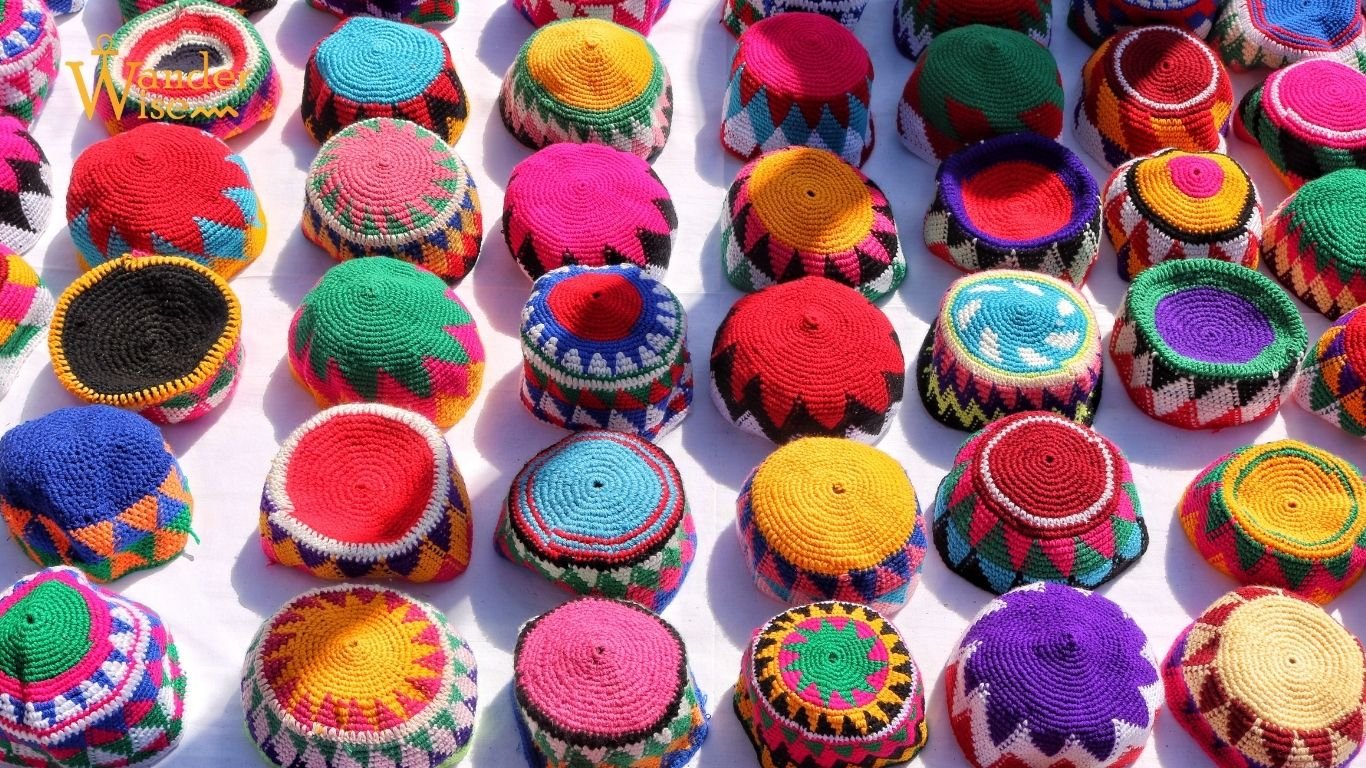
1) Colourful scarves and light fabrics
Aswan is hot, and light fabric is actually useful. Look for:
-
simple scarves you can use for sun, wind, or temple visits
-
bright colours and patterns that match the local style
Tip: check the feel of the fabric. If it’s scratchy or too thick, you won’t use it.
2) Bead jewellery (bracelets, necklaces, anklets)
Beads are easy to carry, easy to gift, and they suit the colourful Nubian vibe.
-
Pick pieces that feel well-made and comfortable
-
Avoid anything that feels sharp or flimsy at the clasp
If you’re buying for kids, go for simple bracelets with strong stringing.
3) Handmade baskets and woven bits
Small woven baskets are a nice buy because they feel like real craft and they travel well if they’re not huge.
-
choose smaller sizes so they fit in luggage
-
check the edges so they don’t poke through clothes in your bag
4) Spices and hibiscus tea (karkadeh-style drink at home)
These make great gifts because they’re light and practical.
-
buy small packs so they stay fresh
-
smell before you buy if the seller offers
If you’re not sure what you’ll actually use, hibiscus tea is a safe pick.
5) Simple art and small painted pieces
You’ll see little paintings and colourful decorative items. If something grabs you:
-
check that the paint doesn’t rub off easily
-
pick a size that won’t get smashed in transit
A small piece is often a better memory than something big you have to stress about carrying.
6) Perfume oils and natural-style scents (only if you like them)
These can be fun, but don’t buy just because someone says it’s “rare” or “special”.
-
smell it on your skin first and wait a few minutes
-
if you still like it after a short walk, then decide
Shopping in a calm way (so you don’t feel pushed)
Aswan shopping can be friendly, but you’ll still get the usual sales chat. Here’s how to keep it easy:
-
Decide your budget before you enter a shop. It stops impulse buys.
-
Ask the price early. Don’t wait until you’re emotionally attached.
-
If you’re not buying, leave kindly. A smile and “thank you” is enough.
-
Don’t carry loads of cash in one place. Keep small notes handy.
-
Walk away if you feel pressured. If it’s a good buy, it will still be there.
One really helpful mindset: you’re not trying to “win” a bargain. You’re trying to buy something you actually like at a price that feels fair.
One thing to avoid (important)
Don’t buy anything that looks like an ancient object or “real antiquities”. If it belongs in a museum, leave it alone. Stick to modern crafts, food items, and simple souvenirs.
FAQ: Nubian culture for first-timers
Is Nubian culture only in Aswan?
You’ll notice it most easily in and around Aswan, but Nubian communities and influence stretch across the far south. Aswan is the easiest place for first-timers to get a real feel for it.
Do I need to book a “Nubian culture tour”?
Not always. You can notice Nubian style just by spending time near the Nile and in local areas. But a guided visit can make it easier to understand what you’re seeing, especially for homes, crafts, and local stories.
Is it okay to take photos in Nubian areas?
Yes, if you do it politely. Wide public shots are usually fine. If a person is clearly the subject, or you’re close to someone’s home entrance, ask first.
What’s the safest souvenir to buy?
Go for practical, modern items linked to local style: light fabrics, bead jewellery, small woven items, spices, hibiscus tea. Skip anything that looks like an “ancient object”.
Any simple manners that matter most?
Greet first, don’t rush, ask before close-up photos, and accept “no” calmly. That’s basically it.
Comment (0)