 English
 Deutsch
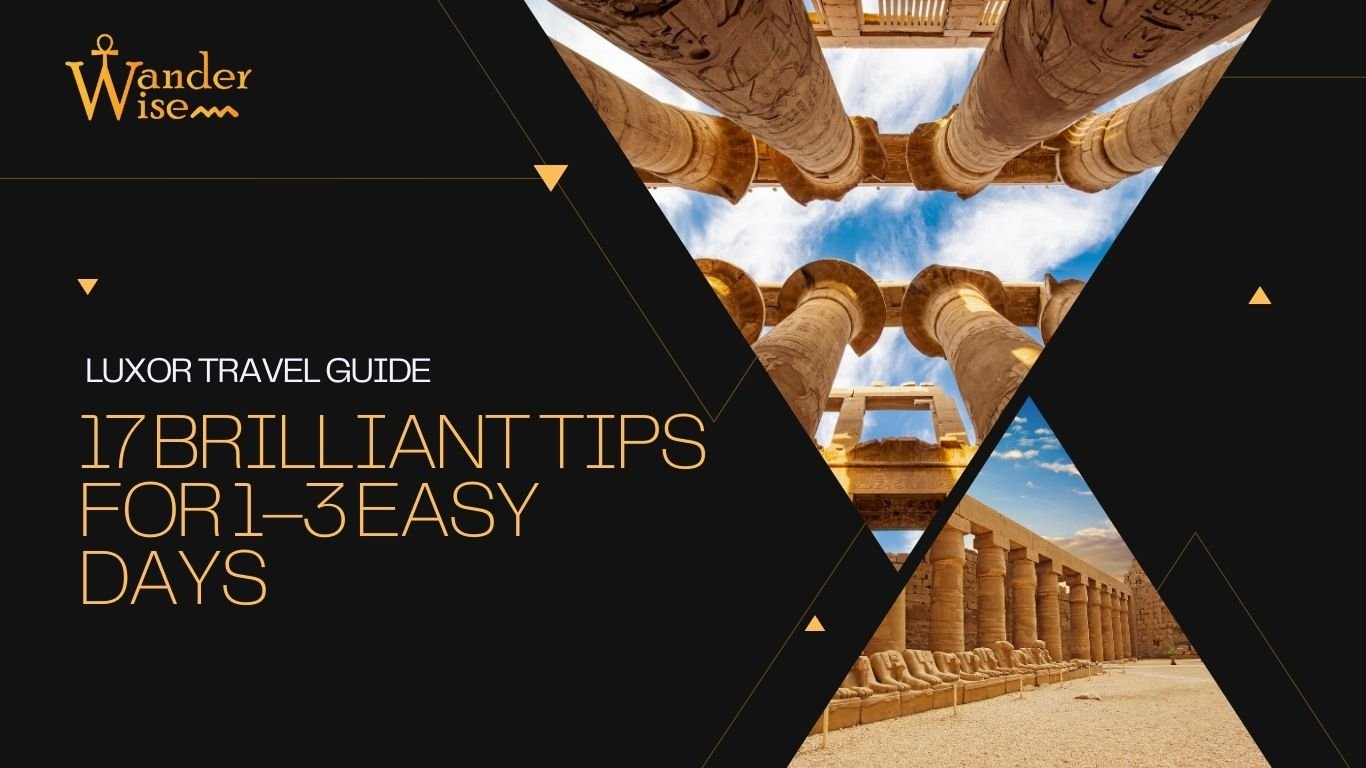
If you’re looking for a Luxor travel guide that doesn’t waffle, this is it. Luxor is basically an open-air history zone: huge temples on one side of the Nile, tombs and desert views on the other. The big win is planning it in a way that feels calm, not like you’re sprinting from one stone wall to the next.
Luxor’s main sights are part of the UNESCO World Heritage area called Ancient Thebes with its Necropolis. That includes the big temples on the East Bank (Karnak and Luxor Temple) and the huge archaeology area on the West Bank.
Here’s the bit most people get wrong: they try to do “everything” in one day, in the hottest hours, with no plan for water, shade, or queues. You end up tired and bored, and you don’t even remember what you saw.
This guide is built for real people:
- You’ve got 1–3 days, not 10.
- You want the best bits, not every single thing.
- You want simple routes, what to wear, what to bring, and how to dodge the annoying tourist traps.
- You might be coming from Hurghada as a day trip, so timing matters.
Also, Luxor is split in a very practical way:
- East Bank: city side, big temples, easier evenings.
- West Bank: tombs, desert, big views, earlier starts usually feel nicer.
And yes, the famous Luxor Temple and Karnak Temple are linked by a long processional route lined with sphinxes (people call it the Sphinx Avenue).
In the next sections, I’ll give you quick routes for 1 day, 2 days, and 3 days. You’ll also get a no-drama checklist for tickets and opening times (they change by season, so I’ll show you what to check before you go).
If you want Luxor to feel fun and not like homework, you’re in the right place.
Quick facts (where everything is)
Luxor is split by the Nile. If you remember one thing, remember this: East Bank = big temples + easier evenings, West Bank = tombs + early starts.
East Bank (city side)
This is the “easy access” side. It’s where you can finish your day without feeling like you’re stuck in the desert.
- Luxor Temple: right in town, works brilliantly late afternoon or after sunset because it’s usually open later than many sites. It’s also one of the nicest “end of day” stops.
- Karnak Temple: huge, busy, and worth doing early if you can. If you arrive late morning, it can feel hot and crowded fast.
Tip: Luxor Temple and Karnak are only a short drive apart, so you can do both in one day without drama.
West Bank (desert side)
This is where the “big ancient stuff” lives. It’s also where heat and timing matter most.
- Valley of the Kings: the headline tomb site. Go early. It’s more enjoyable and you’ll take better photos because you’re not melting.
- The West Bank is also where most people lose time if they haven’t planned transport properly.
Tip: If you’re only in Luxor for 1 day, don’t try to “wing” the West Bank. Decide your route before you cross the Nile.
Getting around (simple and realistic)
- Within Luxor: taxis and private cars are the normal way to bounce between stops.
- Crossing East ↔ West: pick a crossing time and stick to it. The worst feeling is realising you need to cross when the day is already slipping away.
If you’re coming from Hurghada for the day, private transport keeps everything calmer because your timing is tight.
Tickets and opening times (don’t overthink it)
Opening hours and ticket rules can change depending on season, day, and site. The smart move is: check official info the day before (or the morning of), then plan around the heat.
Quick rule that keeps people happy:
- West Bank first (early)
- East Bank later (late afternoon/evening)
Tiny “save your day” checklist
- Water you’ll actually drink (not a giant bottle you carry all day).
- A hat or something for shade.
- Small cash for little bits and tips.
- Tissues and sanitiser (you’ll thank yourself later).
1 day in Luxor (a simple, no-stress route)
If you’ve only got one day, the goal is not “see everything”. The goal is see the best bits, at the right time, without rushing. This route keeps it realistic and enjoyable.
The simple rule
West Bank early, East Bank late.
That’s it. That’s the whole trick.
Morning (West Bank): tombs first, before the heat
Aim to start early. Even if you’re not a “morning person”, you’ll thank yourself.
Stop 1: Valley of the Kings
- This is the main tomb area everyone comes for.
- Go in with a plan: pick the tombs you want most and enjoy them properly instead of speed-running 10.
- Keep your energy for later: the heat and walking add up fast.
Optional quick add-ons (only if you feel good on time)
- One extra West Bank stop that fits your interest:
- If you like big views and drama: go for a viewpoint / temple-style stop.
- If you like detailed art and calmer vibes: choose a smaller, quieter place rather than piling on more.
Key tip: Don’t over-pack your West Bank morning. Most people ruin their day here by trying to cram too much in.
Midday: cross back, reset, eat, breathe
Midday in Luxor can feel intense. Use that to your advantage.
- Cross back to the East Bank
- Grab lunch somewhere simple
- Take 30–45 minutes to chill (shade + water + sit down)
This reset is what makes the afternoon feel fun instead of exhausting.
Late afternoon (East Bank): temples when the light is nicer
Stop 2: Karnak Temple
- It’s huge and it can be busy.
- Late afternoon can be great for photos and vibes, but if it’s packed, keep your visit focused.
- Give yourself a clear “walk loop” so you don’t wander until you’re tired and bored.
Stop 3: Luxor Temple (best finish)
- This is the perfect end-of-day stop because it’s in town and often works well later.
- The lighting in the late afternoon / evening makes it feel more special.
- It’s also mentally easier at the end because you’re not dealing with long drives or crossings after.
What this 1-day plan feels like (the honest version)
You’ll get:
- One big “wow” tomb experience (West Bank)
- One massive temple complex (Karnak)
- One beautiful, easy final stop (Luxor Temple)
You won’t get:
- Every tomb, every temple, every museum, every viewpoint
- And that’s fine. That’s what a good one-day plan looks like.
If you’re coming from Hurghada for the day
This is where people lose the day: transport timing.
- Start as early as you can.
- Keep stops tight and sensible.
- Don’t add extra detours “because you’re already there”.
Quick packing list for the 1-day route
- Water + electrolytes (or at least something salty to snack on)
- Hat / sunglasses
- Light scarf (sun + dust)
- Comfy shoes (you’ll do more steps than you think)
- Small cash
Quick links:
private Luxor temples tour → https://wanderwisetours.com/st_tour/private-tour-to-luxor-temples/
request a private transfer → https://wanderwisetours.com/request-transfer/
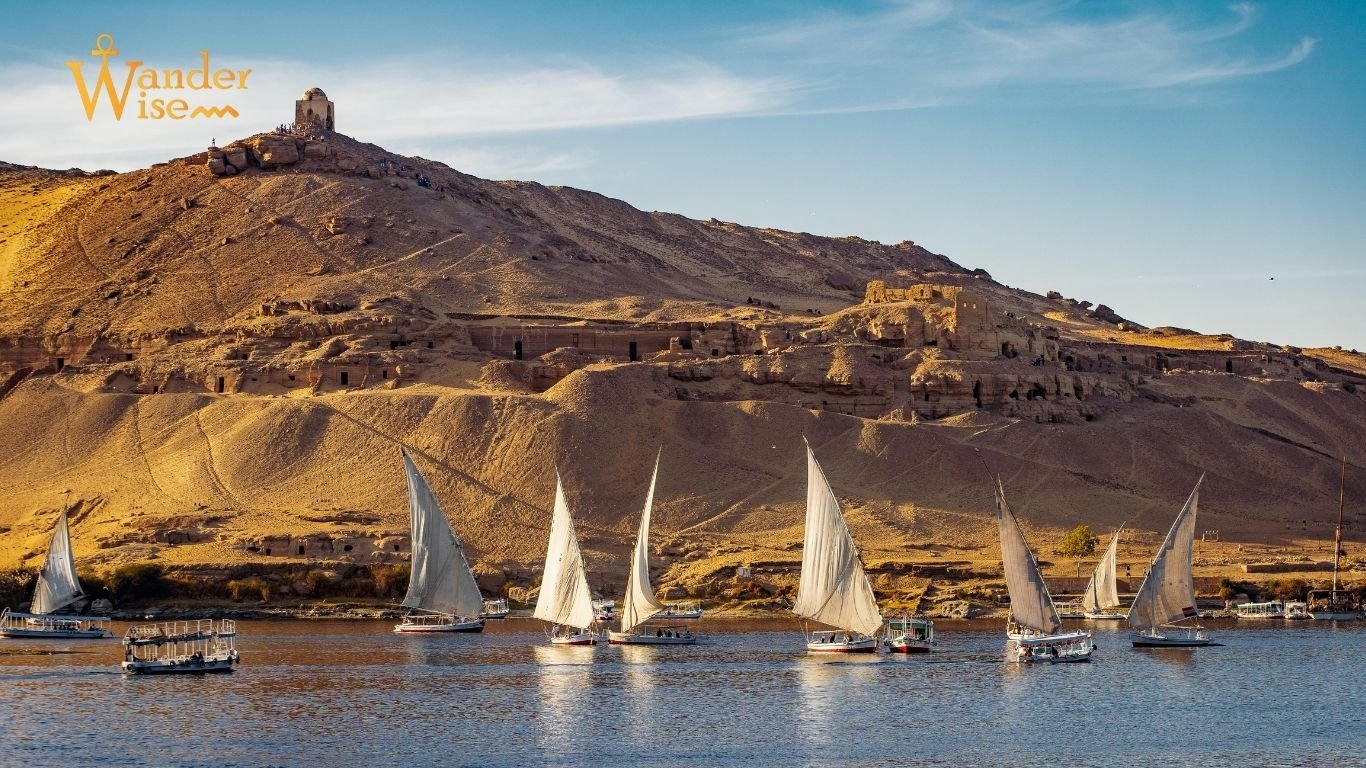
2 days in Luxor (more calm, better pacing)
Two days is the sweet spot. You can do the big-name sights without rushing, and you’ve got time to enjoy Luxor instead of just ticking boxes.
The simple 2-day strategy
- Day 1: West Bank (early) + one easy East Bank stop (late)
- Day 2: East Bank properly + one “extra” that fits your style
This way you don’t do the hottest, most tiring stuff back-to-back.
Day 1 — West Bank first, then a relaxed finish
Morning: West Bank (the big archaeological side)
Stop 1: Valley of the Kings
- Go early, before it gets packed and blazing hot.
- Choose your tombs with intention. You’ll enjoy fewer tombs more than you’ll enjoy rushing through loads.
Stop 2: one West Bank “extra” (pick based on your mood)
Pick one of these vibes:
- Big views + drama (great if you like landscapes and photos)
- Quiet + detailed wall art (great if you like calmer places)
- Something iconic (great if this is your “once in a lifetime” Luxor)
Key tip: Keep this stop tight. The point is to finish Day 1 feeling good, not finished.
Midday: reset time (don’t skip this)
- Cross back to the East Bank
- Sit down, eat something simple, drink water
- Give yourself 45–60 minutes where you’re not walking around a site
This is what stops your second day from feeling like punishment.
Late afternoon/evening: Luxor Temple (easy win)
Stop 3: Luxor Temple
- This is a top-tier “end of day” stop because it’s central and doesn’t feel like a mission.
- Late light makes it feel extra special.
- You can enjoy it without the pressure of “we’ve still got 3 things to do”.
Day 2 — East Bank done properly (plus one extra)
Morning: Karnak Temple (when your brain is fresh)
Stop 1: Karnak Temple
- Give it proper time. It’s huge and it’s one of those places that’s better when you’re not rushing.
- If you can, start earlier so you get a calmer feel and nicer photos.
Tip: Don’t try to see every corner. Pick a simple walking loop and enjoy the main highlights.
Midday: chill + lunch
Yes, again. Luxor is not a “power through” kind of place if you want to stay interested.
Afternoon: pick your “extra” based on what you like
This is the part that makes your trip feel personal. Choose one:
Option A: more history, less heat
- A museum-style stop (good if you like context and air-con breaks)
Option B: local life
- A calm wander, markets, a coffee stop, a slow sunset moment
- This sounds “small”, but it’s often what people remember most.
Option C: more West Bank (only if you feel strong)
- If you missed something you really wanted, you can cross again — but only if you’ve still got energy.
- Don’t force it.
What this 2-day plan gives you (the benefits)
- You see the big hitters without racing
- You avoid the worst heat at the worst times
- You finish both days feeling like you actually enjoyed Luxor
Practical tips that make 2 days feel easy
- Do West Bank early both days if you cross at all
- Keep afternoons flexible
- Build in short breaks so you don’t get bored or overwhelmed
Quick links:
private Luxor temples tour → https://wanderwisetours.com/st_tour/private-tour-to-luxor-temples/
4 days Luxor and Aswan tour → https://wanderwisetours.com/st_tour/four-days-tours-at-luxor-and-aswan/
browse all tours → https://wanderwisetours.com/tours/
request a private transfer → https://wanderwisetours.com/request-transfer/
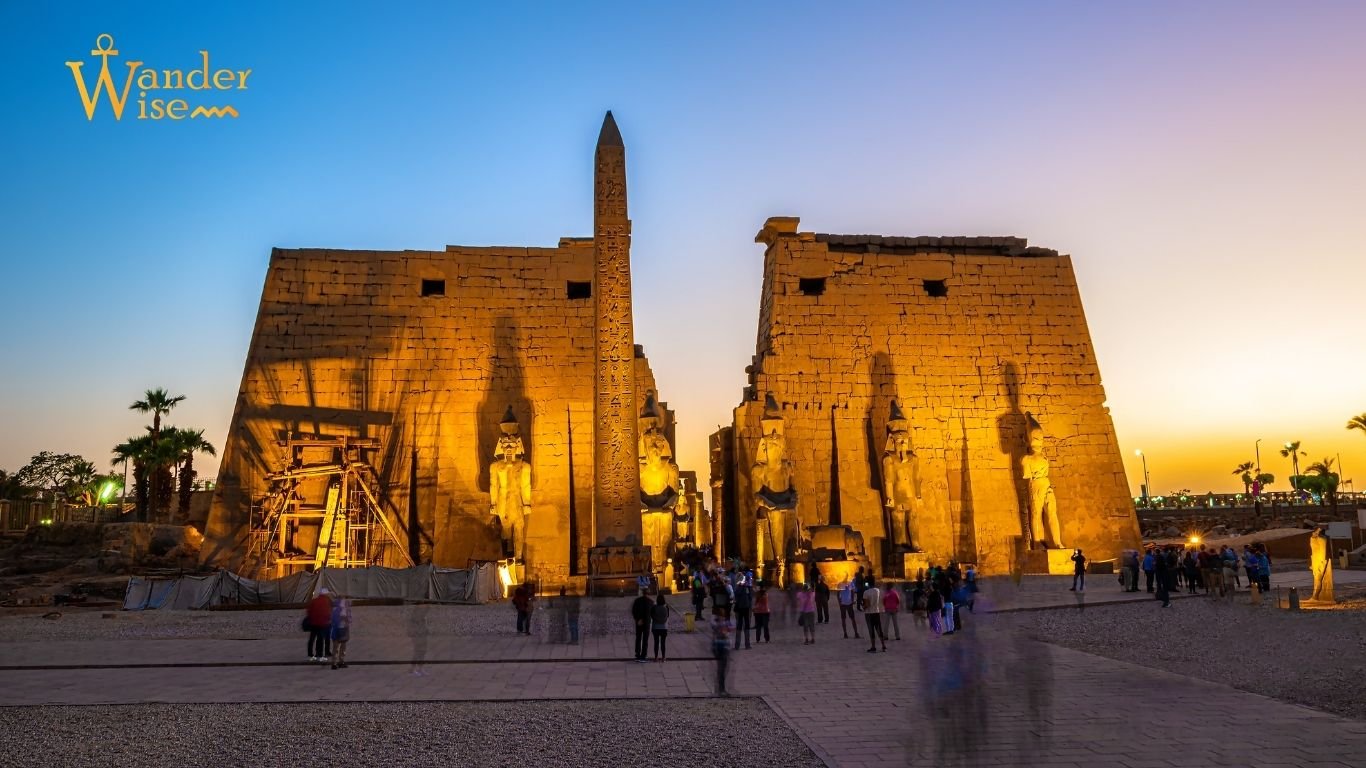
3 days in Luxor (the “proper” way, without burning out)
Three days is when Luxor stops feeling like a rush and starts feeling like a real trip. You can do the big sights, add context, and still have time to slow down.
The simple 3-day strategy
- Day 1: West Bank (early) + Luxor Temple (late)
- Day 2: Karnak (early-ish) + museum or easy afternoon
- Day 3: West Bank “best of” day + a slow finish
This keeps the heavy stuff spread out, so you don’t crash.
Day 1 — West Bank first, then an easy evening
Morning: Valley of the Kings
Start early. This is where heat and crowds hit hardest.
- Pick fewer tombs, enjoy them more.
- Take breaks in shade when you can.
- Keep your water plan simple: drink little and often.
Midday: cross back + lunch + rest
This is not optional if you want to stay interested for 3 full days.
Late afternoon/evening: Luxor Temple
Perfect end-of-day stop because it’s central and doesn’t feel like a mission.
Day 2 — Karnak + context day (so everything makes sense)
Morning: Karnak Temple (give it proper time)
Karnak is big enough to feel overwhelming if you turn up tired. Today you’re doing it when your brain is fresh.
How to enjoy it without getting bored:
- Do a simple loop.
- Focus on the main highlights, not every corner.
- Take short pauses and look up. It’s the scale that makes it special.
Midday: lunch + chill
Yes, again. This is what makes three days actually work.
Afternoon: choose one “context” option
This is where your trip gets better because you stop guessing what you’re looking at.
Pick one:
- Museum-style stop (great for history and a break from the sun)
- A relaxed walk + local vibe (markets, a quiet cafe, slow photos)
- Boat/felucca-style chill time if you want a calm reset
The point is: don’t make Day 2 another exhausting day. Make it the day that makes everything click.
Day 3 — West Bank “best of” day + a slow finish
Today you do the West Bank properly, but smarter than Day 1.
Morning: West Bank highlights (choose based on your taste)
Pick 2–3 stops total, not 6. Here are the best ways to choose:
- If you love tombs and detail: do Valley of the Kings again (or more time there) + one quieter site
- If you want iconic photo moments: pick the most dramatic temple/statue-type stop + one calmer stop
- If you’re travelling with kids or older family: pick fewer places, shorter walks, more shade breaks
Midday: long break
This is the day you’ll feel it in your legs. Sit down. Eat. Take your time.
Late afternoon: your “luxury finish”
Pick one:
- A sunset spot
- A calm final temple visit if you missed something
- A slow evening in town with food and a walk
You want to end Luxor feeling good, not like you survived it.
What 3 days gives you (the real benefits)
- You see the big sights and you understand them
- You avoid the “one huge day” burnout
- Your photos and memories are better because you’re not rushing
Quick links:
private Luxor temples tour → https://wanderwisetours.com/st_tour/private-tour-to-luxor-temples/
4 days Luxor and Aswan tour → https://wanderwisetours.com/st_tour/four-days-tours-at-luxor-and-aswan/
browse all tours → https://wanderwisetours.com/tours/
request a private transfer → https://wanderwisetours.com/request-transfer/
Tickets, opening times, and rules (simple, no headaches)
Let’s keep this dead simple: check times + buy the right tickets + don’t get caught out by “last entry”. Luxor is easy when you do those three things.
1) Opening times: what to expect (and why “last entry” matters)
Most major Luxor sites open early. The catch is they often stop letting people in before the official closing time.
- Karnak Temple: typically opens 6:00 am and has a last entry around 4:00 pm (summer/winter/Ramadan show the same last-entry time on the official booking site).
- Valley of the Kings: summer hours often show 6:00 am with last entry 5:00 pm, and winter can show last entry 4:00 pm.
- Luxor Temple: listed on the official ticket PDF as 6:00 am to 8:00 pm, which is why it’s such a good late-day stop.
Practical tip: plan your day around last entry, not closing time. If you arrive near last entry, you’ll pay full price and feel rushed.
2) Ticket prices: what you’ll actually pay (foreigners vs Egyptians)
Egypt sites usually have different pricing for foreigners vs Egyptians, plus student rates.
From official sources, these are the headline prices you’ll see listed:
- Luxor Temple: Foreign adult EGP 500, foreign student EGP 250 (with Egyptian adult EGP 40, student EGP 20).
- Valley of the Kings: Foreign adult EGP 750, foreign student EGP 375 (Egyptian adult EGP 60, student EGP 30).
- Karnak Temple: Foreign adult shown as EGP 600, foreign student EGP 300 on the official “Discover Egypt’s Monuments” page.
Quick reality check: ticket prices can change, so use official pages the day before you go if you want zero surprises. The Ministry ticket PDF is the cleanest “single place” list
3) The Sphinx Avenue rule (people get this wrong)
If you want to walk the Sphinx Avenue link between Karnak and Luxor Temple, the official ticket PDF says you need tickets for both temples.
Plain English: don’t assume there’s “one ticket for the road”. Treat it as a “connects two paid sites” situation.
4) Student tickets: don’t turn up and hope
If you’re using student pricing, bring a proper student ID and assume they’ll check. It’s normal. The official ticket listings clearly show student categories, which is a hint they care about proof.
5) Tomb add-ons: Valley of the Kings can have extras
Some tombs can be “special tickets” (separate from the main entry), and not all tombs are always open. The Ministry ticket PDF lists separate tomb tickets like Tutankhamun and Sety I alongside the main Valley of the Kings entry.
Simple move: decide what matters to you before you reach the ticket window, so you don’t stand there confused in the sun.
6) A quick “no drama” ticket plan for 1–3 days
Use this if you want the smooth version of Luxor:
- Day starts early: Valley of the Kings first (less heat, more energy).
- Midday: cross back, lunch, rest (don’t waste paid site time while you’re exhausted).
- Late day: Luxor Temple as a finish because it runs later than many sites.
- Karnak: do it when you can give it time (and not near last entry).
What to wear and what to bring (heat-proof, easy, no overpacking)
Luxor is amazing, but it’s also hot, bright, and dusty a lot of the time. If you dress smart and pack light, the whole day feels easier.
What to wear (simple rules that work)
Go light, but don’t go tiny. You want breathable clothes that don’t stick to you.
- Top: light cotton or linen, short sleeves are fine. If you burn easily, go long sleeves but thin fabric.
- Bottoms: loose trousers, long shorts, or a skirt that won’t blow around in the wind.
- Shoes: comfy trainers or walking sandals with a solid sole. You’ll walk more than you think, and the ground can be uneven.
- Hat: non-negotiable. A cap is fine, a wide-brim hat is better.
- Sunglasses: proper ones. The sun bounce off stone is intense.
If you’re visiting religious places later, it helps to have a scarf or light layer in your bag. For the main temples/tombs sites, normal respectful travel clothes are fine.
What not to wear (so you don’t suffer)
- Flip-flops (your feet will hate you)
- Heavy jeans (too hot, too stiff)
- Brand new shoes (blisters = ruined day)
- All-black outfits (you’ll feel hotter)
The “small bag” packing list (this is enough)
You don’t need a massive backpack. A small day bag is perfect.
Bring:
- Water (and keep sipping, don’t wait until you feel dizzy)
- Electrolytes or something salty (crisps, salted nuts)
- Sunscreen (reapply, especially neck and ears)
- Tissues + sanitiser (honestly, this saves you)
- Small cash for small buys and tips
- Power bank (you’ll take loads of photos)
- Light scarf (shade, dust, quick cover-up if needed)
Optional but smart:
- Tiny first-aid bits (plasters for feet)
- Cooling wipes (if you hate heat)
- A snack you actually like (queues happen)
Heat plan (how to avoid the “I feel awful” moment)
Most people don’t realise they’re getting overheated until it hits them. Do this instead:
- Start early (West Bank first if you can)
- Take shade breaks every hour, even if it’s just 2 minutes
- Drink little and often
- Eat something small at midday (not a huge heavy meal)
If you feel headache-y or suddenly moody, that’s usually heat + dehydration. Sit, drink, shade, 10 minutes. You’ll bounce back.
Photos and comfort hacks (tiny things, big payoff)
- Bring a microfibre cloth or a soft tissue for dusty lenses and sweaty hands.
- If you wear glasses, keep a spare wipe because dust is real.
- Tie your scarf to your bag strap so you don’t lose it.
Scams and annoying situations (stay calm, don’t get rinsed)
Luxor is friendly, but it can be intense. You’ll get people trying to sell you stuff, guide you, “help” you, or steer you into shops. The trick isn’t to argue or get angry. The trick is to be boring and consistent.
The golden rule
Decide your plan first, then don’t negotiate with randoms.
If you already know where you’re going next, you’re harder to distract.
1) “My friend, I show you… free” (it’s not free)
This is the classic opener. Someone offers to guide you, show a shortcut, take you to a “secret spot”, or point out something “closed but open for you”.
What to do:
- Smile once.
- Say: “No thanks.”
- Keep walking.
Do not:
- Stop to explain.
- Ask questions.
- Let them “just show you this one thing”.
Stopping is the whole game.
2) “That way is closed” (when it isn’t)
You might hear:
- “This entrance closed.”
- “Ticket office closed.”
- “Temple closed today.”
Sometimes it’s true. Sometimes it’s just a way to redirect you to their mate, a shop, or a paid “guide”.
What to do:
- Say: “Ok, I’ll check at the entrance.”
- Keep moving to the official gate / ticket window.
If it really is closed, you’ll find out there. No drama.
3) Taxi / driver price games (avoid the time-wasting)
If you’re taking taxis, it’s normal to get “tourist pricing” attempts.
Best approach:
- Agree the price before you get in.
- Keep it short: “How much to Karnak? One way.”
- If the price feels silly, say: “No, thanks” and speak to the next driver.
Big mistake people make:
- Sitting in the car and then arguing.
- Once you’re inside, it’s harder to walk away.
If you want a calmer day, a pre-arranged car/driver (especially for West Bank) saves loads of hassle.
4) “Come to my shop” (you don’t have to be polite)
You’ll get shop invites. You’ll get “just look”. You’ll get “special price”.
If you don’t want it:
- Don’t justify it.
- Don’t say “maybe later” (they’ll follow you).
- Say: “No thanks” and keep moving.
If you do want to browse:
- Decide a time limit for yourself.
- Don’t let anyone walk you to a second shop.
5) Photos, animals, and surprise money asks
Sometimes someone offers to take your photo, holds something in front of your camera, or tries to sell a “photo spot”.
Simple rule:
- If you didn’t ask for it, don’t accept it.
- Keep your phone in your hand, not on a table or ledge.
6) How to say no without getting stressed
Use one sentence, repeat it, and walk.
Good lines:
- “No thanks.”
- “Not today.”
- “I’m fine, thanks.”
If someone keeps pushing:
- Don’t debate.
- Don’t explain.
- Just repeat and move.
You’re not being rude. You’re protecting your day.
7) The calm confidence trick (works ridiculously well)
Walk like you’re already late and you know where you’re going. Even if you don’t.
If you need to check Google Maps, step aside, check it, then walk again. Don’t stand in the middle looking lost.
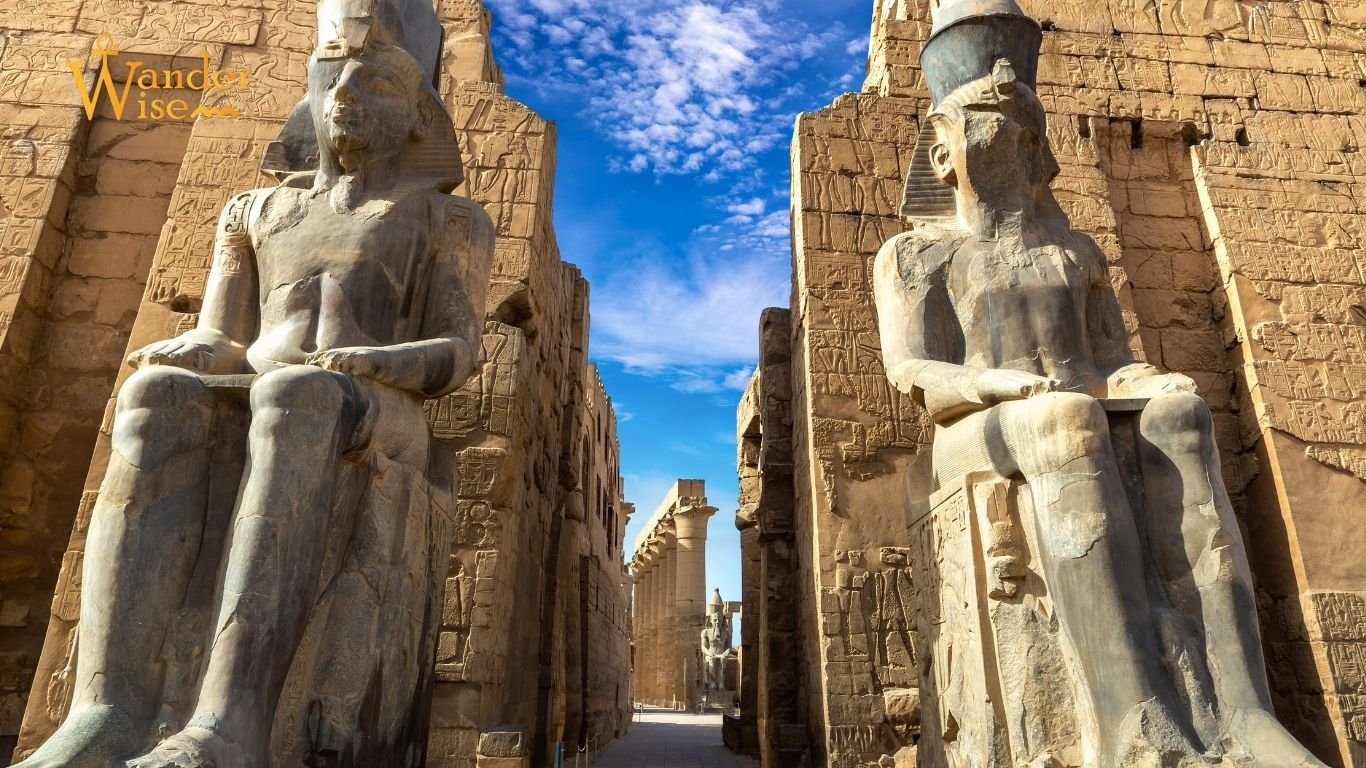
With kids, with parents, with low energy (Luxor for normal humans)
Luxor can be brilliant for families and mixed groups, but only if you plan it like a human, not like a marathon runner. The biggest mistake is copying an “intense itinerary” that looks good on paper but feels awful in real life.
If you’re travelling with kids
Kids don’t care how many temples you “completed”. They care about comfort, snacks, toilets, and having something that feels exciting.
Do this:
- Pick 2 main stops per day, not 5.
- Start early, do the West Bank first if you’re doing it at all.
- Plan a proper break (shade + drink + sit down) before anyone gets cranky.
- Bring snacks you know they’ll eat (don’t rely on finding the perfect thing at the perfect time).
- Use simple “missions” to keep them interested:
- Spot the biggest columns
- Find the coolest carved animal
- Count the sphinxes (even if you stop early)
Avoid this:
- Midday West Bank in full sun.
- Long stretches with no break, no shade, no toilet plan.
Kid-friendly stop order that usually works:
- Morning: one big “wow” place
- Midday: chill + food
- Late afternoon: a calmer, easier site
If you’re travelling with parents or older family
Older travellers often love Luxor, but they need pacing. Heat and long walking distances can hit hard.
Do this:
- Choose sites with shorter walks and clear paths.
- Plan more sit-down time than you think you need.
- Carry water for them (even if they say they’re fine).
- Keep the day flexible so you can cut a stop without guilt.
Smart move: decide in advance which stop is the “must-do” and which one is the “nice-to-have”. That way, if energy drops, you still get the main win.
If you’ve got low energy (or you just hate heat)
Some days you wake up and your body says “no”. That doesn’t mean you can’t enjoy Luxor. It just means you do a lighter Luxor.
Here’s how:
- Do East Bank only for the day (it’s easier, less intense).
- Visit one major site, then do a slow lunch and a relaxed walk.
- Save West Bank for a morning when you feel fresher.
Even on low energy, you can still do:
- Karnak or Luxor Temple (pick one)
- A long break
- A sunset moment
- That’s still a good Luxor day.
Heat-proof pacing that works for everyone
Use this little system:
- 90 minutes walking
- 10 minutes shade
- Repeat
Most people wait until they feel awful, then try to “push through”. That’s when moods drop, fights start, and the day turns rubbish.
What to say if the group starts arguing
It happens. Luxor is intense and people get tired.
Try this:
- “Let’s do one more thing, then food.”
- “We’ll choose the next stop after a break.”
- “We’re not wasting the day by resting. Rest is how we finish strong.”
Hurghada to Luxor day trip basics (timing, what’s realistic, and how not to waste hours)
A Hurghada to Luxor day trip is totally doable, but it only feels good if you accept one truth: it’s a long day on the road.
How long is the journey, really?
Most people are looking at roughly 288–290 km each way and around 4 hours’ driving in good conditions.
That can stretch if you’ve got multiple hotel pick-ups, breaks, or delays, so plan with a bit of buffer.
The “don’t waste your day” start time
If you leave late, you lose the best hours (cooler temps, calmer sites). Your own Luxor day trip guide recommends an early departure around 4:00–5:00 am for exactly that reason.
Simple rule:
- Early start = you see more, with less stress
- Late start = you queue more, sweat more, and rush
What’s realistic to see in one day (without hating your life)
A good Hurghada day trip plan usually means 2–3 key stops, not 6.
The classic “best value” combo is:
- West Bank tombs (main event)
- One big temple
- One easy finish
If you try to cram in extra detours “because we’re already here”, the road time will punish you later.
The easiest way to structure your day
Use this order because it works with heat, crowds, and your energy:
- Arrive and hit the West Bank first (tombs while you still have energy)
- Midday reset (food + water + sit down, even if it’s short)
- East Bank later (temples when the light is nicer, and you’re not baking)
This matches the logic we used earlier in the Luxor sections: hard stuff early, easier stuff later.
Transport choice (what actually changes your experience)
You’ve basically got three “styles” of doing this trip:
- Private car / private tour: fastest door-to-door, easiest pacing, fewer pointless stops. Best if you hate stress or you’re with family.
- Small group: can be decent, but hotel pick-ups can drag.
- Big coach: cheaper, but slower and less flexible.
If you want a calm day and tighter timing, private transport is usually the simplest choice.
Quick links:
private Luxor temples tour → https://wanderwisetours.com/st_tour/private-tour-to-luxor-temples/
- request a private transfer → https://wanderwisetours.com/request-transfer/
Tiny tips that save hours
- Agree your plan before you leave Hurghada (which stops, how long, when you head back)
- Keep the midday break short but real (20–40 mins sitting down is magic)
- Don’t leave Luxor too late unless you’re happy arriving back very late
- Carry your essentials on you (water, hat, power bank, small cash) so you’re not faffing around
Who this day trip suits (honest answer)
It’s perfect if:
- You’re curious about temples and tombs
- You can handle a long travel day
- You want a big “wow” day from Hurghada
It’s not ideal if:
- You hate early mornings
- You struggle in heat
- You want a slow, chill holiday day
If that’s you, Luxor is still worth it — just consider doing it as an overnight or as part of a longer itinerary instead of a day dash.
Next step (choose the right tour or transfer, and click the right pages)
By now you’ve got the routes and the timing sorted. This last bit is about turning “a nice plan” into “a day that actually runs smoothly”.
Step 1: decide what kind of Luxor day you want
Most people fall into one of these three types. Pick yours and your choice gets easy.
A) “I want it easy and stress-free”
You don’t want to bargain with taxis, you don’t want to guess timings, and you don’t want to lose time crossing the Nile or arguing about what’s next.
What to do:
- Book a private option and keep the day simple.
- Use a clear order: West Bank early, East Bank late.
- Give yourself a real midday reset.
B) “I’m flexible, but I still want good timing”
You’re fine with a bit of improvising, but you want a reliable driver and a plan that doesn’t fall apart.
What to do:
- Lock in transport first, then decide your stops.
- Keep it to 2–3 main stops for a day trip.
C) “I want more than Luxor”
If Luxor is part of a bigger trip, don’t force everything into one intense day. This is where multi-day touring makes more sense.
Step 2: pick your “must-do” list (don’t overload it)
For a day trip, your must-do list should look like this:
- Must-do 1: Valley of the Kings (West Bank morning)
- Must-do 2: Karnak Temple (when you have time and energy)
- Must-do 3: Luxor Temple (easy finish, late afternoon/evening)
Everything else is optional. That’s not you missing out. That’s you being smart.
Step 3: make the day run like clockwork (the simple checklist)
Use this quick checklist before you go:
- Your start time is early enough (especially from Hurghada)
- You know your first stop and you’re not “deciding in the car”
- You’ve planned a short lunch break so people don’t crash
- You’re not arriving near last entry at major sites
- You’ve got water, hat, power bank, small cash
If you do those five, Luxor feels smooth.
If you want the calm version of Luxor, don’t over-plan ten stops. Pick your route, sort your transport, and keep the day realistic. Then you’ll actually enjoy the temples instead of just surviving them.
Comment (0)